Pick an Industry with Lots of Waves

I can’t remember where I got the advice but I can’t forget what I learned. It goes something like this…

You can be the best surfer in the world and if there are no waves, it doesn’t much matter. However, you can be just an ok surfer but be in a place where there are lots of waves and chances are, you’re going to catch one and have a good ride.

When starting a company, pick an industry where there are lots of waves!

I think the main point for an entrepreneur (surfer) is to pick a growing industry with lots of demand (waves). I’m not suggesting jumping into something that just has a ton of competition, which validates that yes, there is actual demand. Rather, think about big macro trends that are going to disrupt industries over the next 5 to 10 years and create lots of waves!

When thinking about a new venture, I would look for big trends that will impact a very large number of people and companies. One example is self-driving cars and the disruption it will cause not just to the automobile industry but to all adjacent industries that are part of the driving experience such as commercial real-estate, security, safety, and many more.

Enjoy the Ride!


My interview with FreshBooks

I was recently interviewed by the team at FreshBooks (where my company is a happy customer by the way). Big thanks for helping me to share the Cooleaf story!

Here is the link to the original article: https://www.freshbooks.com/blog/customer-stories-company-culture

Customer Stories: Meet John Duisberg, Co-Founder of Cooleaf

If you take care of your employees, your employees will take care of your customers and your customers take care of your business.

Sounds simple, right? Yet so many companies don’t seem to get it right.

Enter Cooleaf.

Cooleaf helps businesses achieve better business results through a data-driven approach to company culture.

As many startups do, Cooleaf has evolved and pivoted over time. Launching in 2011, the business was initially a health and wellness solution. Then, it shifted to focus on employee engagement. Today, it offers an Agile Business Execution platform that helps businesses achieve their goals and improve business performance with sophisticated analytics.

John Duisberg is one of 3 Cooleaf founders. Many lessons have been learned throughout his entrepreneurial journey and he shares some of those insights with us.

Meet John and learn more about the evolution of Cooleaf.

TELL US ABOUT YOUR COMPANY, COOLEAF.

Cooleaf is focused on helping forward-thinking companies create a culture of engagement so they can attract and retain the best people for their business.

These days,companies need to connect their people to their brand in a more meaningful way. If their own people aren’t passionate about the mission and core values of the company, then how can your customers become passionate about it?

So, Cooleaf exists to help companies strengthen their brand’s value proposition in order to better connect with their employees. This way, they can strive to be a top workplace environment.

HOW DO YOU DEFINE CULTURE?

If you ask ten people what culture is, you’ll likely get ten responses. I personally believe that culture is something that has to be organic—it can’t be manufactured; however, you can be intentional and thoughtful in how you go about building culture.

We work with the leadership teams of our clients to find out what the mission and objectives of the company are. We dig deep to uncover their core values—what they want their people to live and breathe day-to-day. Then we ask ourselves: How can we help our client build a community that brings those core values to life?

AS EXPERTS IN THE AREA OF COMPANY CULTURE, HOW WOULD YOU DESCRIBE THE CULTURE LIKE AT COOLEAF?

We’re a small company now, so everyone works in the same room. It feels like a family. There are about 5 full-time employees at the moment and we’re all in it together, which is really fun.

The challenges come as you grow. We want to focus on preserving that entrepreneurial feel as we grow. We want every person to feel like they are an owner of the company and are invested in its long-term success.

WHAT WERE YOU DOING BEFORE YOU STARTED YOUR BUSINESS? AND WHAT MOTIVATED YOU TO QUIT YOUR DAY JOB AND START OFF ON YOUR OWN?

I worked for a healthcare technology company. I was very successful and I enjoyed what I did.

I worked with one of my now co-founders. At the time, we would have those coffee shop conversations and daydream about starting a business one day. But nothing ever came of those chats. Then, he left to work at another organization. At his new job, he met our third co-founder where those coffee shop conversations continued.

It started going beyond the coffee shop conversation when my former colleague introduced me to his new colleague. That’s when we actually started to take next steps like investing our own money and starting to design stuff.

We were all still working full-time jobs. Slowly but surely, we continued to put in more resources and build up our business. There were some things I wanted to have in place before I felt comfortable enough to go off on my own.

Firstly, I wanted to have a live product, not just a concept. Secondly, I wanted to make sure we had some seed funding in place so we wouldn’t just be burning our own cash. Lastly, I wanted to have a 12-month runway to save up so I could support myself through the bumpy road of entrepreneurship.

Once I had those three things in place I felt confident to take the leap and go all-in on our company.

IN YOUR EXPERIENCE, WHAT’S THE BEST WAY TO APPROACH SEED FUNDING?

Well as a first step, reach out to family and friends and ask: Is this something you’d be interested in?

When I reached out to potential seed funders, I didn’t just want them to contribute financially, but also to be on board as acting advisors. Because when they’re helping you become successful, they are more likely to buy-in to the achievements of your company.

Bring your seed funders in as strategic partners of your business beyond the financial means—that’s attractive to a lot of people.

WHAT ARE SOME OF THE LESSONS YOU’VE LEARNED ALONG YOUR ENTREPRENEURIAL JOURNEY?

  1. It’s going to take 4x longer than you expect and cost 5x more. So prepare yourself. Things will come up and problems will arise. You have to be prepared mentally and financially to be flexible and roll with the punches.
  2. Get some traction in the market before starting to pitch your product. Before going out and pitching, figure out how to build a minimum viable product (MVP) really early on. Figure out if customers will actually pay for the thing you’re offering. That’s the ultimate test.
  3. It’s all worth it in the end. Even though it’s very hard and there are soul-searching days when you get rejected… Remember: When you finally get that win and see a customer enjoying your product—it’s totally worth it.


WORKING WITH 2 OTHER CO-FOUNDERS. WHAT ARE SOME OF THE BENEFITS AND CHALLENGES THAT COME WITH THAT?

For us, it’s been a very good experience.

Being an entrepreneur can be very lonely. At times, you feel like you’re working on an island. So having co-founders can be very helpful in that respect.


Plus, different people bring different skills, a different network and different perspective to the table. Defining and understanding the roles of each person is really helpful. You’ll have to make decisions and move quickly in terms of the business and strategy. Being able to define your roles as co-founders is really helpful.

Keep this in mind: If you are going to work with co-founders, you’re going to be spending A LOT of time with these people, so there has to be professional respect there and you have to work to maintain it.

So, although there can be pros and cons to starting a business with one or two other people, I would absolutely recommend it. There’s a net positive that comes from that.

LOOKING FORWARD, WHAT’S NEXT FOR YOU AND COOLEAF?

It’s an exciting time for us. We have built out a very strong technology platform and we have validated it by bringing on customers over the past year. Some of them are very large customers like Turner Broadcasting for example.

The next stage is to grow and scale. We’re focussed on starting to build out a strategy around customer acquisition and how to make that a repeatable process. Investing in sales and marketing effort as well as developing from a channel partner standpoint.

As we head into the remainder of this year, I’m very excited about where we are and where we will go. We plan to be cashflow positive by the end of the year!


 

Scar Tissue

“When you run a company long enough, you will get some scar tissue. After a while, you will go through so much that you don’t have any skin left. But that’s alright, scar tissue is tougher than skin.” ~ Perry Moss, President of Rubicon Global. 

Last week our hosting vendor went down causing our website to crash for about 15 minutes. Of course, during this time we were supporting one of our largest customers where they were preparing to use our platform to live-stream their employee engagement event around the world. Immediately my cell phone started blowing up about the issue while I’m trying to coordinate with our team to investigate the root cause of the problem. Meanwhile, I’m standing outside of a prospect meeting where I’m about to give a presentation. Talk about feeling a burning on the back of your neck from stress!

Later that day, I was meeting with Perry and openly sharing about what happened.  He then shared with me a story that was way more intense than mine and then he looked at me and said, ‘It’s just scar tissue. If you keep going and pushing hard you will get through whatever challenge you’re dealing with and you will look back and see that it made you stronger’.

I know with my company, the bar keeps getting raised and problems we were dealing with in the past seem trivial to what we’re working through now. However, I expect that six months from now, I’ll look back and feel the same way.

This was a reminder for me as an entrepreneur that there are going to be some really hard days but if I keep moving forward, continue learning, and constantly get better, I know that I will overcome the challenge. 

Why I Vote Republican

With the election so close and politics on everyone’s mind, I wanted to share my personal story about how I started voting Republican. I absolutely respect differences of opinion and I encourage everyone to think about why they vote the way they do.

My story starts in a college economics class. The professor wrote on the board his annual salary and tax rate. He then wrote the additional salary he would make if he taught classes over the summer and the new tax rate he would then be in based on the additional income he earned.

The result was that due to earning more income and being bumped up into a higher tax rate, he would actually lose money if he worked more over the summer. Now this made no sense to me! If he worked more, then he would make less? But it was true and therefore he did not teach classes over the summer, i.e. worked less so he could remain at the lower tax rate.

This really struck me. Why would we as a country have a system in place that punishes someone if they work harder/more? It should be the opposite I thought, where people should be encouraged to work harder.

As an entrepreneur, I work countless hours, take huge risks, and make lots of personal sacrifices. If it works out that I am successful (which the odds are strongly against any entrepreneur), how much should be taken away from me in taxes?  I think this is a fair debate but I sure don’t want to be punished for working hard and being successful.

I can sum up the difference between Republicans and Democrats in a very simple way. Democrats typically favor policies of distributing wealth. Republicans traditionally favor policies of generating wealth. Both side have good intentions along with flaws but I’d rather be on the side of generating wealth because if you don’t have any wealth in the first place, then you don’t have anything to distribute.

How Companies can Accelerate Innovation

For companies looking to accelerate innovation, why not open up a competition for smaller companies to bring ideas, new technology, and entrepreneurship to offer solutions for business problems at your company? This is exactly what Citi did.

I recently had the opportunity to present Cooleaf as part Citi’s Smarter Worklife Tech Innovation challenge. Here is the summary of the challenge from Citi.

“Digital Innovations are affecting every part of Citi’s business including its internal operations. 

Smarter Worklife Challenge enabled by Digital Acceleration within Citi Fintech invited selected technology companies to a crowd-sourcing initiative to identify innovative human resources technologies to improve “Employee Journey”. 

We received 133 submissions from 21 countries, out of which selected 19 Finalists presented their solutions to Citi Leadership at a Demo Day in NYC on February 11, 2016.”

Cooleaf was one of the finalists to present in NYC near Citi’s headquarters. Each company had 8 minutes to present and there was a strong emphasis on sharing a live product demo. The attendees of the event were a combination of Citi executives along with other executives from Citi partners such as PwC who were interested in what solutions would be presented.

We were assigned two RMs (Relationship Managers) that were subject matters experts at Citi that helped give guidance on our presentation and how best to align Cooleaf’s solution to solve specific problems that would most likely result in interest from Citi’s leadership team to do a pilot.

Here is a video of my presentation.

Citi has a huge volunteer and community service program where hundreds of events are organized each year around the world. The challenge for Citi is to maximize awareness about these events for employees to engage in them. There is also a challenge in managing the logistics of employees registering and communications for each local event. We found that much of the logistics are done manually and Cooleaf could add significant value by automating internal processes for Citi while also helping to maximize awareness and engagement into the existing programs that Citi has invested in.

Our proposed pilot for Citi was to create a branded web and mobile employee community platform that is part of the employee on-boarding process. When a new employee joins the company, they would quickly have access to many types of employee resource groups inside Citi to build connections with other employees based on common interest and to also be plugged into the many volunteer and community service opportunities that Citi sponsors.

I’m very proud to say that Cooleaf was one of the eight companies chosen to participate in a pilot with Citi but also one of the three companies selected to receive a cash award!

These types of events are great to help promote innovation. The large company wins by having many smaller companies compete to offer the most innovative solution to a business problem while the smaller companies have an opportunity to then work with a large customer that they most likely would not have had. In addition, there is a great PR opportunity.

I hope to see more of these types of events in the future and would be happy to share more details with anyone interested in hosting this type of event for their company.

How Google Works

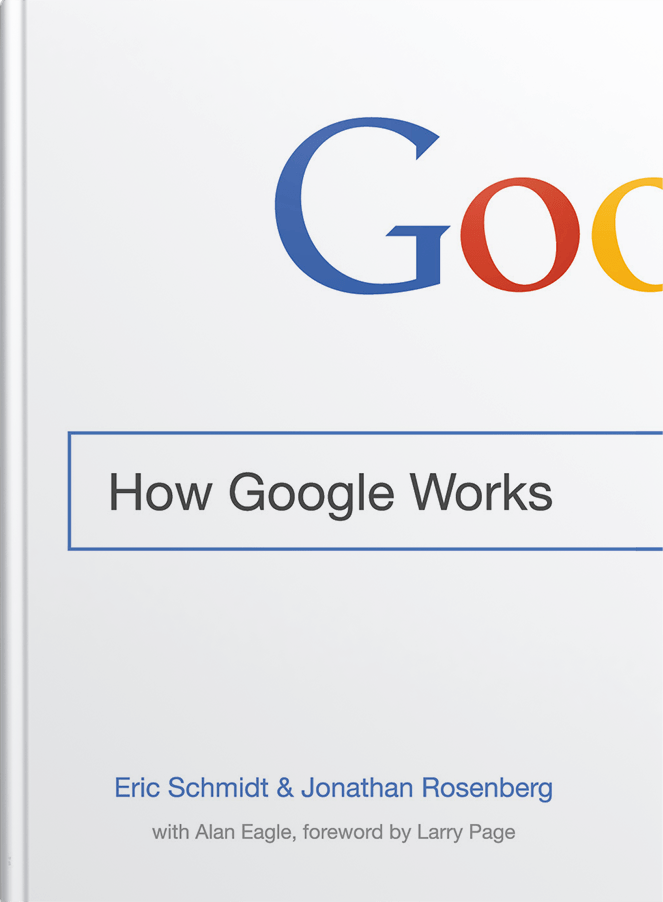
How Google Works“If everything seems under control, you’re not going fast enough.”         – Mario Andretti

I recently read a great book, How Google Works and recommend it for entrepreneurs, business leaders, and anyone looking to think bigger. Here are a few highlights that I found inspiring.

Don’t Look for Faster Horses

There is a quote by Henry Ford where he says that if he asked customers what they wanted, they would have asked for a faster horse, instead of a car. The bigger point in the book is that new products should be based on a specific ‘technical insight’, meaning the product is not just incrementally better than what already exits, rather it has significant technical advantages that pushes the product beyond the current market.

All product owners should be able to clearly answer the question, ‘what is your product’s technical insight?’.

OKRs – Objectives and Key Results

OKRs are the most important things that an employee is working on and how success is measured from the results of their work. Each quarter, every Google employee publishes their OKRs to the entire company. Starting with with the top, Larry Page and Eric Schmidt present their OKRs at an all employee meeting. This gives direction to the company overall and creates an environment of transparency. OKRs are published so all employees can look up any other employee’s OKRs which helps everyone understand what people are working on and what they are passionate about.

Review Yourself

A golden rule for management is to make sure you would work for yourself. In the book, it is suggested for you to write an actual review of your own performance and then share it with the people who work for you. The main point is that if you wouldn’t like to work for yourself, other people probably don’t want to work for you either.

E-mail Wisdom

Respond quickly. In the book, they make the point that some of the best and busiest people are known to be prompt on e-mail. And not just responding quickly to certain people, but to everyone. This encourages a flat organization and speeds up the pace of work. A response can be as simple as, “got it”.

Think Big

Think Big

In the book, the observation is made that most people tend to think incrementally rather than transformationally. It is common to here “you’re not thinking big enough” or “think 10X”, at Google.

It’s those who truly think big in ways that are thought not to be possible, who push innovation.

What ‘Could’ Happen in the Next Five Years?

New products, businesses, and industries are created when you can imagine what ‘could’ happen. When you remove the shackles of today’s limitations you can open up a new world of innovation. In the book, questions are posed such as “do your customers love your product?” and “do your customers use your product regularly?”. Asking questions about what ‘could’ happen will lead to new ideas and possible innovation which drives the company forward.

My dad got me this book, How Google Works as a gift and I recommend it to any entrepreneur or business leader interested in innovation and growing a company.

Don’t Tell Me About Your Product – Give Me 3 Outcomes

show_up_throw_up

My old boss, Mike Neeley used to tell me, ‘don’t just show up and throw up’. I now really understand what he meant.

Recently I was giving a product demo to serial entrepreneur, Brandon Lee. He stopped me midway through my pitch and said, ‘the product looks great, but give me 3 outcomes for what it will do for me’.

In other words, he was saying ‘hey, I don’t really care about your product. I only care about what it will do for me’.

I think it’s easy to get lazy and just pitch your product. It takes time and effort to do the homework to really understand what your potential customer cares about and what your product can do for them.

Thinking about this advice, here are my thoughts for my company, Cooleaf. To give context, we have a technology platform that companies use to manage all of their internal employee programs such as training, wellness, volunteering, social events, and recognizes employees for their level of participation and accomplishments.

Three outcomes for our clients:

  1. Cooleaf will make a large organization feel small – we help connect people inside the organization based on common interests and things people can get plugged into to meet others and build relationships resulting in a stronger company culture
  1. Cooleaf will enable company leaders to track the results of investments in their employees, – by leaders having real data, they are empowered to make more strategic and proactive decisions for their investments in programs for their people
  1. Cooleaf will power a rewards and recognition program for employees – organizations can recognize employee accomplishments and participation in the culture and success of the company

Before speaking with (not to) a client, I encourage you to first do your homework about their needs and understand your connection to them. Then be clear about what your product can do for them and ask the client to prioritize what is most important to them. This will allow you to focus your pitch to what they care about most.

The One Thing That Matters Most When Growing a Company

There are so many lessons that I’ve learned about what really matters and what to focus on when growing a company but I’ve realized that for me, above everything else, it’s having my wife by my side. Starting and growing a company is like riding a roller coaster with many ups and downs. It’s been really important for me to have my now wife (as I recently got married), to be there with me during the hard times to help pick me up and also there with me to celebrate the good times.

Here are a few practical reasons that being in a relationship with someone you really care about can help you grow your company.

  • Focus – let’s face it, when you’re single there are more temptations. You end up going out more and drinking/parting more which can be a big distraction. I’m not saying that an entrepreneur should not have fun but there is a difference between having a good time and letting the good times have you.
  • Drive – when you have to provide for others such as your spouse, it creates a tremendous spark under you to be successful because you know that others are counting on you for their future. This is a big responsibility and one that can’t be taken lightly. I will do anything to protect my family and now that means doing anything and everything I can to grow my company because that is how I will fulfill the hopes and dreams that my wife and I have for growing our own family.
  • Purpose – I believe that doing something of meaning that is beyond yourself, gives you a sense of purpose. This may be what your company stands for in terms of your mission and vision. But beyond the company, I believe there is no greater feeling than knowing that the work that you are doing gives you the ability to make someone you care for happy. In return, they will give you the confidence that you need to carry through the inevitable hard times that comes with starting a company.

Without a doubt, I’m in the camp of having a strong teammate on your side that knows how much you care about your work. It’s important to establish the expectations that your work is a major part of your life and will require sacrifices in terms of your time and money. If you find someone willing to take that journey with you, I believe that the best thing you can do is everything in your power to take care of them and make them happy.

500

Don’t Ever Let An Entrepreneur Complain

images

Being an entrepreneur is hard. Very hard. There have been days when my confidence was shaken and I questioned why I was pouring my heart, sweat, and money into a business that I didn’t know the future of.

However, when I take a step back and think about how I’m investing my time, there is nothing else I’d rather be doing. There is something very special about creating things that have never been created before. Being an entrepreneur means that you absolutely stick your neck out by taking risks, but having the opportunity to blaze your own trail is something rare that a person may only have a few times in their life.

This Thanksgiving I thought about where I sit in my career and the decisions I’ve made. I will be the first to tell you that I would do a lot of things different, but that is based on lessons learned as an entrepreneur. I’ve learned so much about how to start and grow a company. I can honestly tell you that I love what I do and feel that I have an opportunity to change the world which makes me feel that every day matters.

This is the special feeling that I think only an entrepreneur has, which is why I think that you should remind any complaining entrepreneur that they hold a great opportunity in their hands and that is something special.

Creating a Movement

I recently got introduced to this cool video by Alan Urech about creating a movement. The video is only about 5 minutes long and you’ll be glad you watched it.

A few interesting take-aways.

  •  When being a leader, you’re not the most important person but rather it’s your immediate followers. There would be no movement if there were no followers, so pay attention to them and make them feel like leaders too.
  • It takes someone with guts to start something but it also takes guts of a fast follower to validate that the leader actually started something.
  • Once you hit a tipping point, it becomes uncool not to follow due to the fear of being left out.

For me, I can’t say that I try to start a movement every day but I do try to be a leader. I guess, like this guy in the video, if you’re willing to be bold and put yourself out there, you have a shot at starting a movement that you never even thought possible which is a pretty neat thing.