The Entrepreneur Mind – my interview with Kevin Johnson

Kevin and team

I recently read the book, The Entrepreneur Mind. The book is made up of 100 short stories of lessons learned by Kevin Johnson’s experience starting multiple companies, being an investor, and an entrepreneur. One of the chapters in the book is focused on People, which of course is of interest to me because of the focus that my company, Cooleaf has on building strong company cultures.

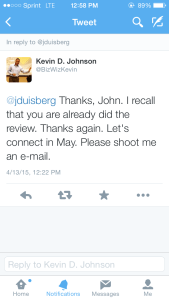
I decided to send a tweet to Kevin since he is local to Atlanta to see if he would be willing to meet. The cool thing was that within minutes he responded and was Tweet to Kevinopen to doing an interview. Here is a short summary of the interview I did with Kevin.
“People make the world go round. It’s all about people and relationships. Entrepreneurs who are most comfortable working with people will be most successful.”

Lesson #42 – Talent trumps seniority

In the book, Kevin shares a story about being a young developer for a company where there was what he called a ‘seniority complex’. In the story, his manager gave him a project to complete that had been dragging along for months in the company. Kevin spent the weekend knocking it out and presented the completed work the next Monday. Kevin was shocked to see his manager being yelled at for getting the project completed. Basically, by Kevin getting the work done so quickly, it made others look bad, especially since he was so young and a junior employee.

Effective organizations learn to remove the seniority complex and focus on performance above all else.

Lesson #44- People do not work for money


One of the stories Kevin wrote about in his book is how he hired people at high salaries for his first company. He found later that interns were just as productive and were willing to work for free. Why? Because they wanted the prestige of writing for a cool magazine (he published a college magazine for his first company). Kevin realized that people were willing to work for something they were truly passionate about.

I asked Kevin how you find people who have that internal passion and are willing to invest into your company. He said to always go with your gut but to also have as many people interview the person as possible. Also let the candidate you are interviewing come in and meet anyone from your company they would like to speak with to get the best understanding of your company’s culture.

Lesson #50 – Fire unproductive people

Making the hard decisions separates true leaders from the rest. I’ve personally experienced how hard it can be to let someone go that you know are not the right fit. In Kevin’s book he emphasizes that productive entrepreneurs are those who are decisive. He says that many entrepreneurs know the right decision but put it off for months before finally making the tough call. This lowers productivity and with a small organization, can be a drain on the entire culture.

When I interviewed Kevin about this point, he mentioned two ideas to think about when making tough decisions.


1. For those who have kids, you can be nice until you think about how the unproductive person who you are delaying letting go is getting in the way of your kid’s college fund. This will get you motivated to make some decisions when you make it personal. Regardless, it should be personal. After all, it’s your company.

2. One way to soften the blow for the employee being let go is to help them find a new role afterwards. Kevin says that if you kick someone in the teeth, at least you can help them find a dentist.

The Entrepreneur Mind

Connecting Talented People in Atlanta

SanboxCrew

There is a relatively new organization in Atlanta called Sandbox Crew, being led by local tech startup community guru, Scott Henerson. The organization has been operating somewhat in stealth mode for the last couple months and is now ready to open up to the public.

The idea behind Sandbox Crew is to connect talented people in Atlanta to strengthen the community overall. This sounds a bit broad but if you’ve ever been to a ‘networking’ event, you know that you really don’t truly meet others. It’s more of a shaking hands and swapping business cards type of formality. The goal of Sandbox Crew is to create small gatherings for people to discuss specific topics of interest and really get to know others within an event or group resulting in more authentic relationships.

The vision of Sandbox Crew attracted me for a couple reasons. One, because I personally want to surround myself around intelligent and passionate people that are interested in bettering the community overall. The idea of creating stronger connections to strengthen a community is also aligned with my company Cooleaf, where we believe that creating more authentic relationships is the foundation of a strong company culture overall.

If you are interested in meeting other ATL leaders on a deeper level with the purpose of pushing the Atlanta Tech scene further, check out Sandbox Crew.


Celebrating the Small Wins

I really believe in the value of taking the time to feel good about the results that you have been able to achieve as a team.

We’ve been absolutely busting our ass at Cooleaf to grow the company. Recently we took 10 minutes on a Friday afternoon to celebrate a couple small wins and bang the crap out of a gong that is located in our office building at the Atlanta Tech Village.

I think part of building a culture is experiencing both ups and downs in your company and how you deal with them. Don’t forget to celebrate the small wins so your team can take a breath, smile, and feel happy about the crazy and awesome train that they are riding on.

Cooleaf Gong Hit

Finding Your Core as a Startup Company

Cooleaf is constantly evolving. We are learning everyday from customers. I truly believe in that as part of survival. I also believe there should be fundamental principles at your core as a company that guide you. These principles can be difficult to learn and I think we are just now starting to really understand them. I think you really don’t know what you stand for until you have stood for a little while. Because then you get tested, rejected, and ignored. That’s when you really see what you believe in.

Here is our story at Cooleaf to finding our core.

The initial product launch for Cooleaf was a web app. that allowed consumers to pick and choose fitness classes from health clubs and studios without having to be a member of the gym. Our idea was to give people more flexibility, get a discount, and earn rewards for signing up for healthy classes. We got some traction but it wasn’t sustainable.

We found that what we thought was our target market, active people who liked getting fit, actually didn’t really need our product because they already felt good about the gym or studio they were in. They were fine with their current routine. We weren’t solving a critical problem for them. There was also a segment of the market that did like trying new things and not being locked down into a membership but at the same time they were getting e-mails from Groupon and Living Social with deep discounts that we couldn’t offer.

We started evolving into the corporate space by allowing the HR Director for example to offer all their employees a corporate discount to the Cooleaf partner network based on a corporate rate we negotiated with health clubs and studios. We started to get more traction because the communication was going through a trusted source, being the company a person works for. We found this as a much more efficient marketing strategy for acquiring new users to our platform. However, it still didn’t change the fact that we were not solving a problem for people.

Around the same time as we were starting to work with employers for distributing the ‘corporate perk’ we called it, or employee discounts, we started organizing group events open to anyone to join. The first one we did was a IMG_0304kickboxing class at Atlanta Kick back in April of 2012. We promoted the event to our user base where we charged $5 for the class and then set up a happy hour afterwards. We figured we might as well have fun with this. People started showing up and bringing their friends. I remember thinking, ‘where did these people come from?’. It was a cool feeling to see people showing up to our event and having a good time.
We found that doing things as a group made more sense for people to try something new. Even if the class wasn’t great, at least they were with friends to have a good time. It became more about having a fun or good experience as opposed to just a fitness session. We got feedback that people liked the idea of being able to meet others who also shared their passion.

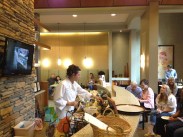
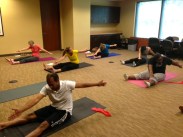
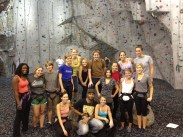
As we continued with the group events, we started testing the idea of setting up group events that are private to the employees of a company. This meant for example, bringing in a chef to do a cooking demo at a company’s office, onsite yoga classes, or taking groups of employees to rock climbing outings. We found that employees loved it and employers were willing to pay for it. Based on the traction we were getting, we started focusing on offering awesome group experiences for employees at our employer clients.

IMG_0427Alere Pilates1IMG_0681

Typically the conversation with an employer client would start around offering a wellness program that their employees would actually want to participate in because it was based on fun activities that employees gave feedback on that they wanted to do. We  would also get feedback from company leaders that they would use our program as part of their new employee onboarding process to get new hires introduced into the organization and start meeting others. The idea of organizing awesome group outings become much more about team building and making the company a better place to work rather than trying to improve the health of employees. People getting healthy was more of a byproduct of what we did.

We believe the best way to have a strong, innovative culture for a company is by creating an environment that fosters employees to have authentic relationships with one another. We help make this happen for a company by organizing fun group activities that allow employees to connect with other employees based on common interest and having fun.

By no means do we have it all figured out. We’re not even close. We are still constantly evolving how we position ourselves and what we can offer to maximize the value to a customer based on understanding and solving their problems. From all of this customer discovery and self discovery, we have come to put a stake in the ground on the following core guiding principles.

  • Enabling people to connect with others through fun, active experiences resulting in authentic relationships based on common interests, goals, and affiliations.
  • Creating more fun, collaborative, authentic, and positive cultures in organizations through engaging experiences for people.