Burn the Boats

I’ve recently been reading a book called Think and Grow Rich, by Napolean Hill. The premise of the book is that you can achieve anything if you want something bad enough and set your mind to go out and get it.

In the book, there is a story about an ancient war general who leads his troops to the enemy’s land. His army was outnumbered by a more powerful enemy. Once he and his troops arrived, he instructed his troops to burn all the boats. Before the battle, the general addressed his troops and said, ‘ You see the boats going up in smoke? That means that we cannot leave these shores alive unless we win! We now have no choice. We win or we parish.’ They won.

I believe the idea of going all-in and not hoping to achieve something but rather making up your mind that you will achieve it, is the only way to truly be successful at what you do.

I find this to be true for me personally with my marriage and professionally running my own company.

Everything worth doing is hard and there are days when I question myself. I have to always remember that I will figure out a way to achieve my goal and take steps everyday towards making it happen.

Next time you find yourself questioning if you can make it, just remember…. burn the boats!

How Companies can Accelerate Innovation

For companies looking to accelerate innovation, why not open up a competition for smaller companies to bring ideas, new technology, and entrepreneurship to offer solutions for business problems at your company? This is exactly what Citi did.

I recently had the opportunity to present Cooleaf as part Citi’s Smarter Worklife Tech Innovation challenge. Here is the summary of the challenge from Citi.

“Digital Innovations are affecting every part of Citi’s business including its internal operations. 

Smarter Worklife Challenge enabled by Digital Acceleration within Citi Fintech invited selected technology companies to a crowd-sourcing initiative to identify innovative human resources technologies to improve “Employee Journey”. 

We received 133 submissions from 21 countries, out of which selected 19 Finalists presented their solutions to Citi Leadership at a Demo Day in NYC on February 11, 2016.”

Cooleaf was one of the finalists to present in NYC near Citi’s headquarters. Each company had 8 minutes to present and there was a strong emphasis on sharing a live product demo. The attendees of the event were a combination of Citi executives along with other executives from Citi partners such as PwC who were interested in what solutions would be presented.

We were assigned two RMs (Relationship Managers) that were subject matters experts at Citi that helped give guidance on our presentation and how best to align Cooleaf’s solution to solve specific problems that would most likely result in interest from Citi’s leadership team to do a pilot.

Here is a video of my presentation.

Citi has a huge volunteer and community service program where hundreds of events are organized each year around the world. The challenge for Citi is to maximize awareness about these events for employees to engage in them. There is also a challenge in managing the logistics of employees registering and communications for each local event. We found that much of the logistics are done manually and Cooleaf could add significant value by automating internal processes for Citi while also helping to maximize awareness and engagement into the existing programs that Citi has invested in.

Our proposed pilot for Citi was to create a branded web and mobile employee community platform that is part of the employee on-boarding process. When a new employee joins the company, they would quickly have access to many types of employee resource groups inside Citi to build connections with other employees based on common interest and to also be plugged into the many volunteer and community service opportunities that Citi sponsors.

I’m very proud to say that Cooleaf was one of the eight companies chosen to participate in a pilot with Citi but also one of the three companies selected to receive a cash award!

These types of events are great to help promote innovation. The large company wins by having many smaller companies compete to offer the most innovative solution to a business problem while the smaller companies have an opportunity to then work with a large customer that they most likely would not have had. In addition, there is a great PR opportunity.

I hope to see more of these types of events in the future and would be happy to share more details with anyone interested in hosting this type of event for their company.

How Social Learning will Disrupt Traditional Corporate Training

If you have a corporate job, you most likely have experienced being required to take some type of online training courses. If you’re like me, you try to get through them as fast as possible so you can focus on your real work.

The crazy thing that I’ve found in the corporate world is that even as important as knowledge and learning are for the business, the way it’s facilitated is as if people are back in grade school.

Once an organization is large enough, say around 200 employees, they may have a Learning Management System where employees take quizzes and training courses. The reality though is that people are busy with their work so these training courses are only a required nuisance to ‘check the box’ than actually learning.

Real people learn from real experiences. I personally find it so much more valuable to look someone in the eyes and hear about how they dealt with a situation in a real-world setting.

Companies have a huge untapped asset regarding the knowledge and experiences of their people. The big question is how to effectively share knowledge in a way that is meaningful for both the individual and the business.

I believe the best way to share knowledge inside an organization is through Social Learning. Think back on the last time you went to lunch with someone you looked up to. That person may have shared experiences about a problem that you are dealing with. This intimate conversation has your attention and you’re engaged because someone is sharing knowledge about a topic that matters to you.

What if we applied this same scenario inside a company in a way that is more scalable? Instead of a lunch meeting, what if that person with experience and expertise shared their knowledge with 10 to 15 other employees in a meeting room. What if the business determined certain skills and knowledge that was critical for employees to have in order to achieve company goals and scheduled a series of such events to focus these topics?

A learning focused organization is a critical competitive advantage. Technology can help maximize knowledge sharing to occur across teams that is aligned back to specific business goals.

I believe there is a huge opportunity to disrupt the current stale model of corporate training. Organizations that invest in social learning across teams will benefit from employees that are engaged in learning skills and knowledge that better themselves and the business.

At Cooleaf, we’ve found that our product works very well to organize and manage employee knowledge sharing events. One customer example is Daugherty Business Solutions, who uses Cooleaf to create team events focused on sharing knowledge about specific skills and other categories that help grow their business.

Below is a snapshot of Daugherty’s community dashboard and a sample knowledge sharing event.

Screen Shot 2016-01-24 at 11.14.33 AM

Screen Shot 2016-01-24 at 11.17.33 AM


What It’s Like Inside A Top Startup Accelerator

500 Startups

My company was recently accepted into the 500 Startups accelerator program which, is one the most exclusive in the world. There is approx. a 3% acceptance rate. For the last couple months, I’ve been spending every other week in Silicon Valley at their HQ in Mountain View, CA. Needless to say we’ve been pushing it hard and earning a lot of sky miles.

500 Startups is a micro VC and as part of the program, they invested $100K in our company. There is also an investment made with their network of mentors and CEOs who are there to help you grow and keep you accountable.

There is a lot of hype from the outside about these accelerators. I wasn’t sure at first if I wanted to do it. After all, we had an existing business with customers and revenue. I was worried that we would get there and would be told to start over and redo our product.

What I found was different than what I had expected. We have barely talked about our product. I guess the assumption is that you already have a solid working product; otherwise you would not have been accepted into the program in the first place. The main focus is on how to scale your business. They push you for growth and then hold you accountable each week for hitting specific growth metrics.

Since joining the program we have quadrupled our level of sales outreach to build up our customer pipeline and are developing a repeatable sales process. Having a level of accountability each week where you have someone asking simple questions such as ‘why didn’t you hit your metrics?’ or ‘you didn’t have time to pick up the phone and call that prospect, really?’ all hit home hard when you’re looking someone in the eyes and you know there is a high expectation for you to deliver.

It’s not all roses. Things could be organized much better. It’s one of those deals where it’s totally up to you to get what you want out of the program. There are lots of resources available to you but it’s up to you to go get them.

We actually don’t spend the majority of our time at the program when we’re traveling there. Much of the time we spend visiting prospects in the Bay area based on our sales efforts. The amount of learning that we have done in such a short period of time has been phenomenal. There are a lot of talented people in the Bay area due to the strong startup ecosystem. We just brought on a new strategic investor after being there for only two months.

I absolutely would recommend the 500 Startups program for other entrepreneurs. The program has pushed us out of our comfort zone in a good way while providing guidance to scale our company. We’ve learned that there is no silver bullet. Growing the company into our vision is in front of us if we hustle like hell and go out and get it!

Taking Your Team on Tours of Duty

I recently read The Alliance, which was co-authored by Reid Hoffman (founder of Linkedin). In the book, the concept of employees taking a ‘tour of duty’ at their job was articulated as the best way to maximize the employee and employer relationship in this new age of the workforce. The Alliance

Back in the 50s and 60s, there was an expectation that you find a job and stay there for your career. Both the employer and employee bought into this mindset and as a result, both thought more long-term.

Now days employees have a much shorter view of their time at their employer. This is especially true in competitive work environments where there are lots of career options for employees to choose from.

The idea of an employee taking a tour of duty with a company is focused on establishing a short-term (1 to 2 years) goal where the employee is willing to invest their time, skills, and passion to achieve a personal goal such as growing a specific skill set or solving an interesting problem while their work results in significant value  for the business.

The employer wins because they get a highly engaged employee committing to a specific project or strategic initiative for the business while the employee wins by achieving a personal goal that is important for their career.

Once a tour of duty has been completed, perhaps the employee takes on a new tour of duty at the company in a new business unit or a new strategic project. It may seem counterintuitive, but I believe it’s in the best interest for both the employee and the manager to have an open conversation about the employee’s career path even when that path may lead to leaving the company. The reality is, an employee may leave your company regardless but at least you have the right of first conversation.

Are You a Service Company or Product Company?

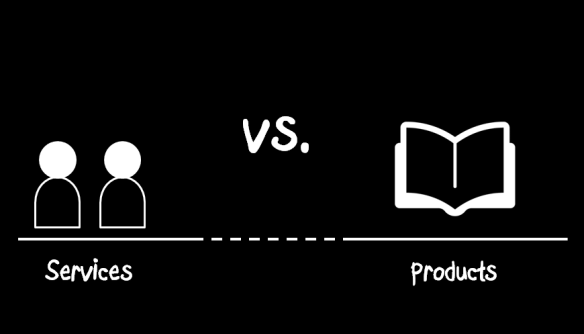
service vs product

It’s a funny thing what you learn as you work to grow a company. We have pivoted multiple times at Cooleaf and we’re still learning every day. What matters most is traction and solving a problem for a customer that is important enough that they are willing to pay for it. That is easier said than done.

For some time we were troubled about being a service based company. At our core we loved technology and wanted to be a tech company. We transitioned into focusing our messaging to prospects on the product. What we learned is that people don’t buy your fancy product. They only buy a solution to their problem.

After building an incredible technology platform, we found it hard to sell. It was great to demo and we would get very positive feedback but the contract would never close. Our product would allow a customer to execute on an employee engagement strategy in great depth with extensive product features that we would tout. The problem was most of the prospects we talked to weren’t that great at creating an employee engagement strategy and they did not have a burning need to have a tool to manage it.

I find a similar analogy with marketing automation products such as Hubspot, which is a great tool if you know how to use it. We purchased this tool and let it sit on the shelf for about six months while we figured out our marketing strategy. It didn’t matter how many features the tool had, until we had our strategy in place we were not going to get value out of it. We found the same thing with Cooleaf and our customers.

Based on these learnings, we have embraced a services component to our company that lives in our Customer Success Manger role. By our team working with many customers in different industries we have learned best practices to achieve the greatest results that a customer is seeking. We now focus on the front-end strategy with a new customer that we call our on-boarding period which is basically a short project plan to lead a customer to being successful using our product.

We’ve found that some of our customers just want to be told what to do. I don’t blame them. It’s not their core business and they want us, ‘the experts’ to show them the best way to achieve their goals.

In the sales process now, I focus on understanding the customers end goals and share about how we can help achieve them rather than sharing product feature after product feature. This has been a lesson learned for me that I hope helps other founders to find their product traction.

Traction Trumps Everything

Customer Traction

As an entrepreneur, chances are you will look for funding from investors at some point while growing your startup.

Pitching your company to investors can be a humbling experience for the entrepreneur. As a founder, you are passionate about your product and believe in the future growth potential for your company. Investors however, are skeptical and look to poke holes in the business.

You can’t blame an investor for not being interested in your business. There are many reasons why an investor may choose to pass on your company. The thing that is frustrating is when you get feedback from an investor that makes it obvious that they don’t understand your business.

I’m ok with an investor saying no, but at least know what you’re saying no to. Maybe it’s the entrepreneur’s fault for not being clear enough about how their company solves a critical problem in the market. Or maybe it’s the fault of the investor for not taking the time to understand the business. What I’ve learned is that it doesn’t matter.

There is only one thing that matters and that is traction.

If you have paying customers, then obviously they find value in your product. Customer traction trumps everything! It’s hard to argue with your paying customers.

The more customers, the more credibility your company has and the less you have to explain to a potential investor. At some point, if the investor still doesn’t understand your business even after you have shown legitimate traction, then you probably don’t want to be working with that investor anyway and you should look at it as them doing you a favor for not wasting any more of your time.

The Entrepreneur Mind – my interview with Kevin Johnson

Kevin and team

I recently read the book, The Entrepreneur Mind. The book is made up of 100 short stories of lessons learned by Kevin Johnson’s experience starting multiple companies, being an investor, and an entrepreneur. One of the chapters in the book is focused on People, which of course is of interest to me because of the focus that my company, Cooleaf has on building strong company cultures.

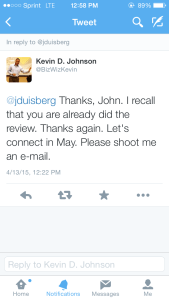
I decided to send a tweet to Kevin since he is local to Atlanta to see if he would be willing to meet. The cool thing was that within minutes he responded and was Tweet to Kevinopen to doing an interview. Here is a short summary of the interview I did with Kevin.

“People make the world go round. It’s all about people and relationships. Entrepreneurs who are most comfortable working with people will be most successful.”

Lesson #42 – Talent trumps seniority

In the book, Kevin shares a story about being a young developer for a company where there was what he called a ‘seniority complex’. In the story, his manager gave him a project to complete that had been dragging along for months in the company. Kevin spent the weekend knocking it out and presented the completed work the next Monday. Kevin was shocked to see his manager being yelled at for getting the project completed. Basically, by Kevin getting the work done so quickly, it made others look bad, especially since he was so young and a junior employee.

Effective organizations learn to remove the seniority complex and focus on performance above all else.

Lesson #44- People do not work for money


One of the stories Kevin wrote about in his book is how he hired people at high salaries for his first company. He found later that interns were just as productive and were willing to work for free. Why? Because they wanted the prestige of writing for a cool magazine (he published a college magazine for his first company). Kevin realized that people were willing to work for something they were truly passionate about.

I asked Kevin how you find people who have that internal passion and are willing to invest into your company. He said to always go with your gut but to also have as many people interview the person as possible. Also let the candidate you are interviewing come in and meet anyone from your company they would like to speak with to get the best understanding of your company’s culture.

Lesson #50 – Fire unproductive people

Making the hard decisions separates true leaders from the rest. I’ve personally experienced how hard it can be to let someone go that you know are not the right fit. In Kevin’s book he emphasizes that productive entrepreneurs are those who are decisive. He says that many entrepreneurs know the right decision but put it off for months before finally making the tough call. This lowers productivity and with a small organization, can be a drain on the entire culture.

When I interviewed Kevin about this point, he mentioned two ideas to think about when making tough decisions.


1. For those who have kids, you can be nice until you think about how the unproductive person who you are delaying letting go is getting in the way of your kid’s college fund. This will get you motivated to make some decisions when you make it personal. Regardless, it should be personal. After all, it’s your company.

2. One way to soften the blow for the employee being let go is to help them find a new role afterwards. Kevin says that if you kick someone in the teeth, at least you can help them find a dentist.

The Entrepreneur Mind

How Google Works

How Google Works“If everything seems under control, you’re not going fast enough.”         – Mario Andretti

I recently read a great book, How Google Works and recommend it for entrepreneurs, business leaders, and anyone looking to think bigger. Here are a few highlights that I found inspiring.

Don’t Look for Faster Horses

There is a quote by Henry Ford where he says that if he asked customers what they wanted, they would have asked for a faster horse, instead of a car. The bigger point in the book is that new products should be based on a specific ‘technical insight’, meaning the product is not just incrementally better than what already exits, rather it has significant technical advantages that pushes the product beyond the current market.

All product owners should be able to clearly answer the question, ‘what is your product’s technical insight?’.

OKRs – Objectives and Key Results

OKRs are the most important things that an employee is working on and how success is measured from the results of their work. Each quarter, every Google employee publishes their OKRs to the entire company. Starting with with the top, Larry Page and Eric Schmidt present their OKRs at an all employee meeting. This gives direction to the company overall and creates an environment of transparency. OKRs are published so all employees can look up any other employee’s OKRs which helps everyone understand what people are working on and what they are passionate about.

Review Yourself

A golden rule for management is to make sure you would work for yourself. In the book, it is suggested for you to write an actual review of your own performance and then share it with the people who work for you. The main point is that if you wouldn’t like to work for yourself, other people probably don’t want to work for you either.

E-mail Wisdom

Respond quickly. In the book, they make the point that some of the best and busiest people are known to be prompt on e-mail. And not just responding quickly to certain people, but to everyone. This encourages a flat organization and speeds up the pace of work. A response can be as simple as, “got it”.

Think Big

Think Big

In the book, the observation is made that most people tend to think incrementally rather than transformationally. It is common to here “you’re not thinking big enough” or “think 10X”, at Google.

It’s those who truly think big in ways that are thought not to be possible, who push innovation.

What ‘Could’ Happen in the Next Five Years?

New products, businesses, and industries are created when you can imagine what ‘could’ happen. When you remove the shackles of today’s limitations you can open up a new world of innovation. In the book, questions are posed such as “do your customers love your product?” and “do your customers use your product regularly?”. Asking questions about what ‘could’ happen will lead to new ideas and possible innovation which drives the company forward.

My dad got me this book, How Google Works as a gift and I recommend it to any entrepreneur or business leader interested in innovation and growing a company.

Connecting Talented People in Atlanta

SanboxCrew

There is a relatively new organization in Atlanta called Sandbox Crew, being led by local tech startup community guru, Scott Henerson. The organization has been operating somewhat in stealth mode for the last couple months and is now ready to open up to the public.

The idea behind Sandbox Crew is to connect talented people in Atlanta to strengthen the community overall. This sounds a bit broad but if you’ve ever been to a ‘networking’ event, you know that you really don’t truly meet others. It’s more of a shaking hands and swapping business cards type of formality. The goal of Sandbox Crew is to create small gatherings for people to discuss specific topics of interest and really get to know others within an event or group resulting in more authentic relationships.

The vision of Sandbox Crew attracted me for a couple reasons. One, because I personally want to surround myself around intelligent and passionate people that are interested in bettering the community overall. The idea of creating stronger connections to strengthen a community is also aligned with my company Cooleaf, where we believe that creating more authentic relationships is the foundation of a strong company culture overall.

If you are interested in meeting other ATL leaders on a deeper level with the purpose of pushing the Atlanta Tech scene further, check out Sandbox Crew.