I’m guessing that a good place to start is in the beginning. This is a story about how I have come to find myself now, with a start-up company showing some signs of survival, finding an identity, and still not sure what the future entails.
I don’t think many people growing up think, ‘I want to start a company’. I didn’t at least. I got my first taste of entrepreneurship working for a start-up company, called Football Fanatics. It was an online retailer back when the idea of buying sports apparel and clothing online was starting to get some traction, in the 2002 time frame.
I was a student at the University of North Florida. My baseball ‘career’ as a catcher had just ended after two years at Brevard Community College. I started at UNF and decided to focus my energy and work ethic on establishing myself a professional career now that I didn’t have baseball to pour countless hours into anymore. I joined a business fraternity called, Delta Sigma Pi (still love those guys/gals) and met a buddy of mine with a similar passion for business named Jon Roy. We both were in the Coggin College of Business together and were looking for an internship and came across Football Fanatics.
The job actually started out as just what I call, cheap labor. It was the holidays and they needed help boxing up all the orders they were getting in from the website. We worked in a small room behind the Football Fanatics retail store in the Orange Park Mall in Jacksonville, Fl. It was actually a great setup for the online business because they were able to leverage the existing store business and operations to support the online retail startup. Things like inventory, corporate buying, and overall tactical things like payroll were already up and running. Brent Trager ran the operations and was the visionary behind the business. To this day, I give him credit for my personal inspiration and the beginning of my love affair with entrepreneurship.
A personal friend of mine, named Ross Kirchman (much more on Ross to come because mark my words, he is going to be a rock star in his professional career and he is a big influence on me) and I were recently talking at one of our BC (Breakfast Club – like I said, much more to come on Ross) sessions about what it means to be a real player. To give proper context, we were talking about my recent experience closing our seed investment round for Cooleaf and all of the investors and so called investors or what I like to say people who like to talk a lot. I told him that I met some real players, some of which invested in my company, Cooleaf. He asked me how I defined a real player. My response… someone who is smart enough to recognize an opportunity and has the balls (courage that is) to act on it. I’m digressing from my story so I’ll go back to it now.
I stayed with Football Fanatics for roughly a year. During that time I got my first experience truly solving problems. I remember Brent coming to Jon Roy and myself saying, ‘guys, we need to set up a shipping department, can you do it?’. We literally were able to start something from scratch and get it up and running. I remember the awesome feeling of satisfaction of actually thinking about coming up with a strategy and implementing it and then seeing the results immediately in real life. I think that is the essence of being an entrepreneur – getting great satisfaction out of creating something new. It was a great ride while at Football Fanatics. Brent, thank you again for giving me the chance and believing in me.
From Football Fanatics I took a job with a healthcare IT company called, Availity in October of 2003. This was a totally different world for me. It was a small company where I was the 37th employee. However, the company was owned by Blue Cross Blue Shield of Florida so it had a much more big company, corporate feel. I can look back and say that at Availity is where I grew up as a professional. I met some great people and learned so much. I knew very little about healthcare or technology but I was willing to work hard. I started in the Finance Department, working for the CFO Margaret Gomez. I will write more about my time at Availity because it literally launched my professional career. It is a great company and I wish it the best of success. I met some lifelong friends at the company and mentors. Great people like Mike Neeley and Mary Kelley will always be a huge influence on me as I’ve learned so much from what we have been through together.
For this story, I will get to where I met an important person in my journey to starting a company, Sarwar Bhuiyan. I was a Product Manager at Availity at the time and Sarwar was working as a Project Manager. We happened to get paired on a couple projects together. We hit it off right away. I was a young, passionate employee working hard and wanting to get things done. We complimented each other very well. We were able to implement several successful products together. We not only had success working on these projects but we enjoyed working together. This is where we started with conversations about starting a company. During lunches and coffee, Sarwar and I would talk about things we could do better at the company and the industry overall. We would talk about lots of ideas. Most of the time the conversations were related to the company and within the industry. We even came up with what I’ll call a ‘white paper’ outlining several ideas that we could pursue and presented it to a mentor of mine, Mike Neeley (much more on Neeley to come as well). Of course being classic Neeley, he shot down all of our ideas! We probably owe him a thank you for that though.
All in all, Sarwar and I had fun talking about new business ideas but never got serious enough to take that next step to actually starting something on our own. He left Availity and joined a company called Relay Health which is a division within McKesson. That is where he met who was going to be our co-founding partner of Cooleaf, Prem Bhatia. Sarwar and Prem apparently hit it off just like Sarwar and I did. Being the fatherly figure or connector, Sarwar brought us three together.
Prem, Sarwar, and I first all met in December of 2008 for a dinner in Atlanta. I remember it was the SEC Championship football weekend. I was actually with Ross for the Gator game at the time (fun times!). This was somewhat of a ‘feeling each other out’ type of meeting. We decided to set up a weekly call where we would discuss different ideas. Sometimes we would have research that we would come back to the group with. We did this casually for a few months. I think we all had an internal desire to start a new venture which I think we all felt in each other as well but we weren’t settled on one particular idea. We began the process of pitching different business concepts.
For right or wrong, our idea generation stage went on for a few months. We started to hone in on the concept that Prem brought up which was the idea that employers were investing in programs for employee wellness programs but the types of programs in the market weren’t really that good, meaning the participation and utilization of employees was really low. I think more than anything we were all fixated on the idea of starting a new company rather than solving a particular problem (first big mistake by the way). We slowly started to define in more detail what we believed to be a problem in the market and a solution that we could provide. We got more and more serious to the point where we actually formally incorporated Cooleaf in July of 2009.
All of us were working full-time jobs so things continued to progressed slowly. We were all committed to the new venture but we all had unique personal responsibilities which meant continuing with the corporate job. We started narrowing in on a MVP (minimum viable product), or what we thought was an MVP. We started to get into the details on what our product and service was going to be, business model, marketing and distribution strategy, etc… At this point the theory/concepts discussion changed into the ‘ok, what can we really get done with our budget’ discussion. The answer to that was not nearly as much as we would have liked but even the MVP took us much longer and cost much more than expected.
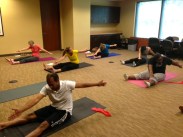
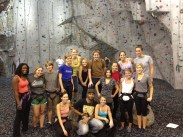
We defined our MVP as the idea of building a health and wellness marketplace made up of a network of health clubs and fitness studio partners and opening up their inventory of classes and programs for people to book individually as opposed to having to be a member of one particular gym. The network included everything from a traditional health clubs, yoga studios, massage studios, to rock climbing facilities. The user would get discounts off of the retail rate and earn rewards, similar to a credit card rewards program where as you enrolled into classes you earned points redeemable for a catalog of items such as an iPod, gift cards to local running stores, and charitable donations.
I think that people who have never been in product/software development think that coming up with an idea and building it is much easier than it really is. It may seem like such a simple concept such as showing a list of classes and let people sign up. Well, you can easily get lost in the details of design, user navigation, and all of the thousands of micro decisions that must be made when building an technology platform. Around the Spring of 2010 is when we started prototyping the product and going through this process. It took way longer than we thought and much longer than it should have. We would get so caught up in things that really didn’t matter much looking back such as where a button goes or how to design a web page. We would go round and round on some of the most trivial things. I think going through this in the early stages that I now have a better sense of maturity where I have a feel for what is a priority and what is worth spending time on in terms of compromising and making sure you get what you want internally with your partners.
Another big mistake that I believe we made was ‘drinking our own Kool-aid’ when it came to doing customer discovery on whether or not we were solving a real problem. We did online surveys and we would interview friends and strangers but when it was all said and done I don’t think anything would have stopped us from moving forward. We would drill into the user experience of a web page versus really understanding if we were really solving a critical problem that a person would pay for. Even later after we launched our product I remember people telling us how much they loved our product but then they would never use it. Lesson learned for me is that people will tell you what you want to hear. Solving a true problem for someone and providing real value is when they want or like the product/service enough that they are willing to pay for it in my opinion or spend significant time on it.
We found a development partner in the fall of 2010 and started building the real product. Again, the plan was to take a couple months and it ended up taking about 3 times longer than expected. Looking back that is really what I have found with anything that we have developed. Anything from a small enhancement to a major product feature seems to always take longer and costs more than expected. I would suggest to definitely give yourself some buffer when it comes to timeline and budget. We ended up going live with www.cooleaf.com on March 21st, 2011 around 2am in the morning. It was a huge feeling of accomplishment and I remember feeling so proud that something that we have worked for so long has finally happened. The irony though is that we had no idea just how much struggle and hard work was ahead of us.
Me, the night Cooleaf went live! 
From our product launch, we have evolved and iterated significantly as a company based on traction and feedback from real customers. I look forward to sharing stories about our journey along the way. This story was to provide the foundation for it all on how it all started. I’ve learned a lot of hard lessons since then but I will say that to this day I still have a great internal passion for creating things that have never been created before and providing value to other people.
I left a great paying job that I actually enjoyed to go full-time on Cooleaf. It was one of the biggest decisions I’ve ever made in my life. To this day I can’t say with certainty that our company will be successful but even with all that being said, there is no other place that I’d rather be right now than figuring it out every day and growing the company towards bigger and better opportunities. It is a roller-coaster of an experience with lots of ups and downs but I’m absolutely enjoying the ride.

 kickboxing class at Atlanta Kick back in April of 2012. We promoted the event to our user base where we charged $5 for the class and then set up a happy hour afterwards. We figured we might as well have fun with this. People started showing up and bringing their friends. I remember thinking, ‘where did these people come from?’. It was a cool feeling to see people showing up to our event and having a good time.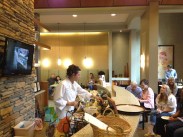

 Startup Lessons Learned